Chapter 1: Framework Overview
Complete framework introduction and philosophy. Core problem addressed and key differentiators. How the framework transforms organizational capability.
The Pionäär Framework provides systematic approaches to the hardest challenge in management: coordinating complex work across multiple stakeholders with competing priorities and limited resources. This chapter introduces the complete methodology and philosophy.
Framework Overview
The Strategy Execution Framework is a systematic approach to implementing the coordination capability that enables organizations to execute their strategies predictably and adaptively. It addresses the universal challenge of coordinating complex work across multiple stakeholders with competing priorities and limited resources, while fundamentally transforming how products and services get built and delivered through systematic organizational design.
Developed over 10+ years across banking, logistics, government, and startup environments, the framework integrates four critical organizational dimensions: systematic resource allocation through single-pipeline coordination, strategic budget architecture, systematic management philosophy, and value stream organizational design. These elements work together as an integrated system rather than separate modules, creating sustainable competitive advantage through enhanced coordination capability.
Core Problem Addressed
Most organizations fail not because they lack good strategy or talented teams, but because they lack systematic coordination capability to execute strategy collaboratively. All organizational work—business initiatives, platform improvements, refactoring projects, competency development, technical debt reduction—must flow through unified systematic prioritization processes. The framework eliminates parallel work streams and forces all organizational effort through systematic coordination that addresses resource conflicts, unclear priorities, and delivery chaos.
Rather than struggling with functional leaders competing for resources through separate budgeting processes, organizations gain systematic coordination capability where technical leaders advocate for technical initiatives using identical systematic processes as business initiative owners. This creates predictable and adaptive strategy execution while enabling systematic leadership development through structured trade-off conversations.
Key Differentiators
- Single-Pipeline Coordination: All work flows through unified systematic prioritization process
- Strategic Budget Architecture: Resources allocated through Goals→Initiatives structure rather than functional hierarchies
- Systematic Management Philosophy: Context/Process/Coaching approach enabling autonomous decision-making
- Value Stream Organization: Systematic workshop processes implement through any organizational structure that serves customer value
- Bidirectional Communication: Top-down clarity + bottom-up transparency for strategic alignment
- Visual Resource Constraints: Making coordination conflicts immediately visible
- Iterative Value Delivery: Systematic slicing that changes what gets built and how
- Capability Transfer: Building internal coordination expertise vs. external dependency
- Change-Oriented Approach: Psychological safety before organizational diagnosis
Strategic Leadership Benefits
Enhanced Strategic Decision Quality
Systematic feedback loops provide leadership with real market response data and delivery reality insights, enabling evidence-based strategic pivots rather than theoretical planning. Leaders develop genuine understanding of business domains and technologies through structured trade-off conversations that include technical initiatives competing with business priorities, leading to more impactful strategies versus generic corporate best practices.
Organizational Strategic Intelligence Development
The framework builds collective strategic reasoning capability across all organizational levels through repetitive strategic and tactical analysis integrated with systematic resource allocation. Instead of relying on individual departmental excellence, organizations develop cross-functional strategic thinking where functional leaders contribute to solution design while competing for implementation priority through systematic trade-off processes that govern all organizational work.
Competitive Agility Through Systematic Learning
Organizations become strategically smarter over time, solving complex customer challenges faster than competition by focusing on desired impact and internal capabilities rather than building speculative corporate platforms. This systematic approach to strategic intelligence enables sustainable competitive positioning through adaptive response capability enhanced by unified resource allocation across all organizational work streams.
Product Development Transformation
From Monolithic to Iterative Value Creation
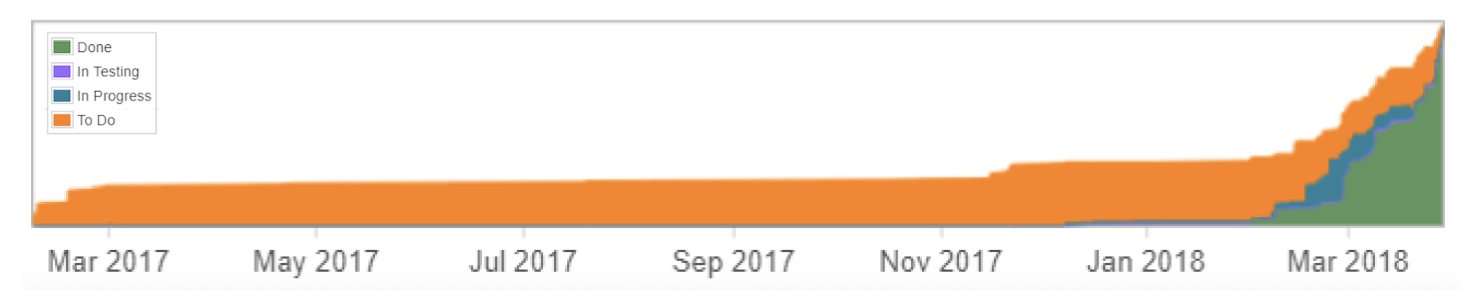
Traditional delivery projects tie together many related requirements into monolithic releases where not all features get adopted and some bring more cost than benefit. The framework forces organizations to discuss and prioritize each goal, requirement, use case, and scenario individually through systematic resource allocation processes that treat business features and technical initiatives identically, delivering them iteratively in thin value slices.
Systematic Impact on Product Outcomes
- Enhanced ROI: Teams build only high-impact, truly mandatory requirements first, postponing nice-to-haves until they're actually needed more than the next strategic opportunity, including technical improvements that compete systematically with business features
- Simplified Solutions: System designs and UX become inherently simpler through iterative refinement and user feedback integration, supported by technical architecture initiatives that receive systematic prioritization alongside business requirements
- Accelerated Time-to-Market: Minimal viable iterations enable ideas to hit the market faster with frequent delivery that eases B2B customer expectation management, while technical debt reduction and platform improvements compete systematically for resources to support delivery velocity
- Early User Validation: Solutions enable user testing sooner, reducing the cost of remakes and improvements while enabling rapid course correction, supported by infrastructure and quality initiatives that compete for priority through systematic business impact criteria
- Granular Financial Tracking: Strategic budgets flow through Goals→Initiatives structure rather than functional hierarchies, making IT investment capitalization automatic reporting rather than complex accounting, with ROI discussions happening at initiative level rather than abstract project level
Product Management Process Integration
The framework provides systematic product management processes that Product Managers actually run daily, while creating the organizational coordination that enables product strategy execution at scale through unified resource allocation where technical initiatives compete with business initiatives for implementation priority.