Chapter 1: Overview
Understanding Systematic Coordination
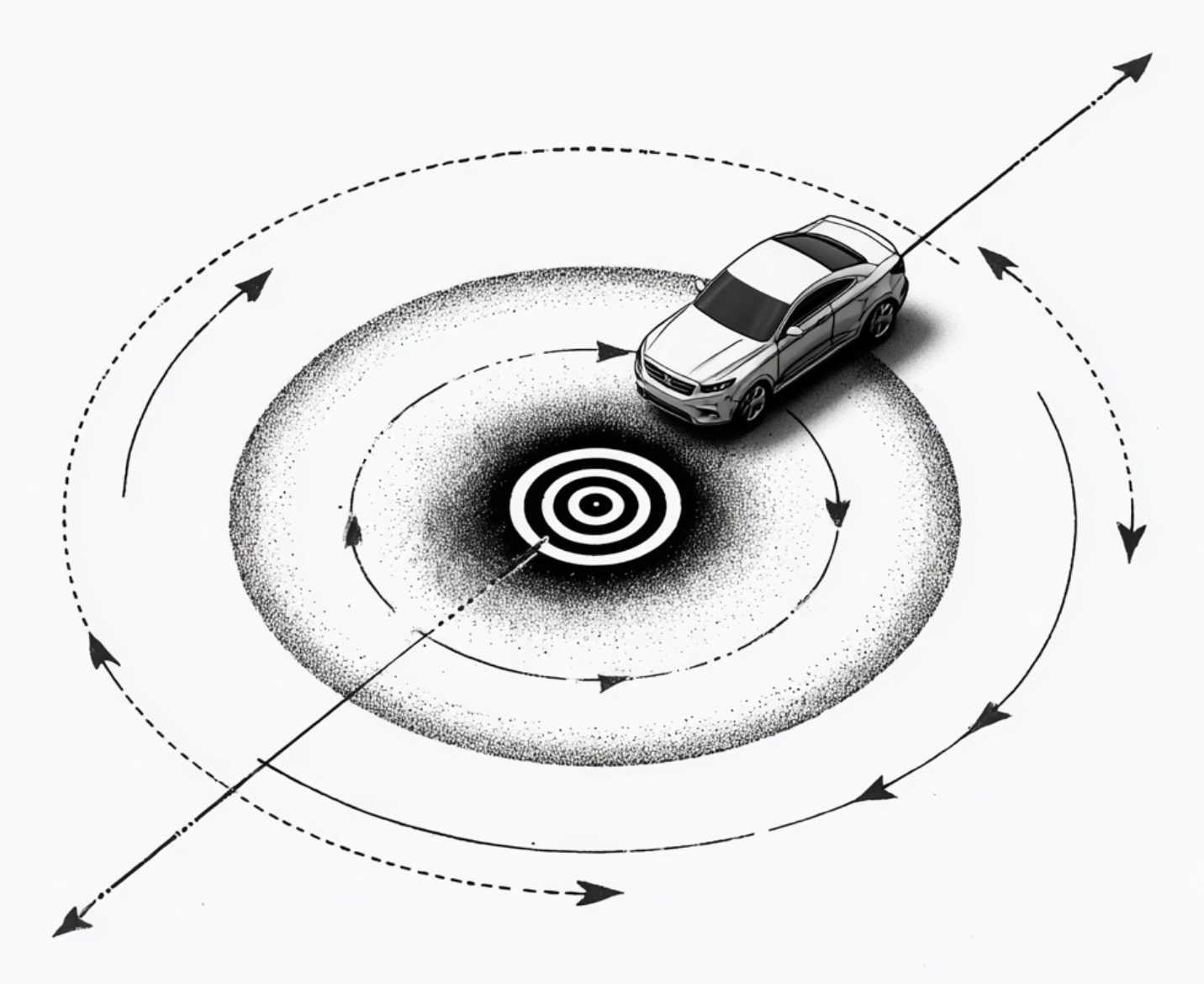
Every organization faces the same fundamental challenge: coordinating complex work across multiple stakeholders with competing priorities and limited resources. Most approach this chaotically. The Pionäär Framework provides systematic alternative—designed with coordination physics, not fighting them.
The Coordination Challenge
You have strategy. Goals defined, priorities set, resources allocated. Leadership aligned on direction. Plans documented. Teams capable and motivated.
Then execution begins.
Within weeks:
- Strategic priorities conflict with operational realities
- "Urgent" requests override systematic planning
- Cross-functional dependencies create bottlenecks
- Teams busy but business value unclear
- Management meetings multiply, coordination through discussion not systems
- Heroics required for delivery
The Universal Pattern
This isn't unique organizational dysfunction. It's universal coordination physics. Strategy drifts during execution through predictable vectors:
What Traditional Approaches Miss
More documentation? Instructions compress under cognitive load—exist in documents but disappear from working memory when decisions happen.
Better communication? Information flows but doesn't stick. Strategic context explained clearly, teams understand, then delivery pressure returns and systematic approach abandoned.
Stronger management? Authority can force compliance but can't build capability. Heroics deliver projects but don't prevent next coordination breakdown.
Organizations lack systematic coordination capability. They coordinate through heroics, discussions, authority, hope. Works small-scale. Fails systematically as complexity grows.
Framework Foundation
Core Problem Addressed: Coordinating complex work across multiple stakeholders with competing priorities and limited resources—systematically, repeatedly, with improving capability over time.
The Approach: Not fighting coordination physics. Designing WITH drift reality:
Foundation: Strategic Alignment (Chapter 2: Golden Circle)
WHY (Goals) → HOW (Initiatives) → WHAT (Slices) hierarchy. Clear structure connecting daily work to strategic purpose. Foundation BEFORE explaining why it drifts.
Accept drift is continuous (Chapter 3: Strategy Will Drift)
Eight vectors pulling execution away from intent. Behavioral gravity, not individual failures. Design with physics instead of fighting coordination gravity.
Shift to capability focus (Chapter 4: Capability Over Delivery)
Game frame inverting delivery pressure into capability focus. Each coordination challenge = learning opportunity.
Build visibility infrastructure (Chapter 5: Make Drift Visible)
Frame anchors externalizing state for external observation. Visual resource constraints. Self-catch impossible—external observation required.
Design systematic recovery (Chapter 6: Prime for Recovery)
Memory priming (awareness + pointers) surviving compression. Bidirectional communication. Monthly reprocessing cycles preventing drift accumulation.
Enable systematic transformation (Chapter 7: Enable Change)
Change methodology working with drift physics. Workshop architecture building capability. Implementation phases with built-in recovery checkpoints.
Learn from patterns (Chapter 8: Learn From Patterns)
Failure modes as behavioral gravity teachers. Tools as capability amplifiers. Continuous improvement systematic not aspirational.
Key Differentiators
Evidence-Based Design
10+ Years Practice: Framework evolved through actual organizational coordination across government, banking, logistics, technology. Every component proven through practice, refined through evidence.
Government Research Validation: Estonian Ministry of Finance study documenting 20% delivery improvement and 75% satisfaction increases. Independent research validation.
Substrate-Independent Validation
Eight months systematic AI collaboration documentation revealed substrate independence. Framework developed over 10+ years coordinating humans (imperfect memory, politics, partial transparency) then validated with AI actors (perfect memory, no politics, complete transparency). Same drift patterns observed in both.
Framework works coordinating humans (harder conditions) AND AI (easier conditions) = universal coordination physics.
Capability Transfer Focus
Traditional consulting: Expert arrives with answers → Organization receives solution → Consultant exits → Organization continues needing external help.
Pionäär approach: Framework taught systematically → Teams practice with coaching → Capability builds progressively → Consultant role fades → Organization operates independently.
Compression-Aware Design
Framework components designed knowing detail compresses under cognitive load:
- Memory priming: Awareness (lightweight, always present) + Pointers (detail, accessed when relevant)
- Visual constraints: Finite board space making trade-offs immediate not assumed
- Frame anchors: Externalized state enabling N vs N-1 comparison
- Monthly reprocessing: Designed rhythm preventing accumulation
Framework Validation
Real-World Evidence
Estonian Ministry of Finance (Government)
Challenge: Coordinate digital transformation across multiple agencies
Framework Application: Three-horizon change management with visual resource constraints
Results: 20% delivery improvement in public sector, 75% satisfaction increase. Independent research validation.
Regional Banking Transformation (Financial Services)
Challenge: Systematic delivery capability across technology teams
Framework Application: Complete framework implementation with capability transfer
Results: Delivery predictability established. Award winning technology developed. Internal teams coaching new teams independently.
Logistics Scaling (Operations)
Challenge: Scale coordination as company grows 3x
Framework Application: Visual planning systems with bidirectional communication
Results: Maintained delivery quality through growth. Same framework scales from 50 to 150+ person organization.
AI Collaboration Meta-Research
Eight months systematic documentation:
- 20 discoveries about coordination physics
- 6 documented recovery cycles
- Substrate independence proven
- Compression mechanism identified
- Systematic recovery validated
Key Findings:
D4: Self-catch impossible
System needing recovery cannot detect own need. External observation required. Frame anchors enable observation from artifacts not self-report.
D7: Inversions help
Game frame inverting delivery pressure creates compression-resistant tension. Inverted frame creates conflict surviving compression.
D16: Designed rhythm essential
"Reprocessing at rhythm intervals is the designed state. Failure to reprocess is the anomaly." Monthly cycles aren't overhead—they're how coordination works.
Getting Started
Prerequisites for Success
- Leadership commitment to systematic change vs quick fixes
- Internal change champions available for collaboration
- Timeline flexibility for framework development
- Resource allocation aligned with transformation scope
First Steps
1. Assess organizational readiness
Chapter 3 diagnostic: Which drift vectors most active? Where does coordination break down? What recovery mechanisms exist currently?
2. Identify internal champions
Who understands coordination challenges deeply? Who has credibility across teams? Who wants systematic solution not quick fixes?
3. Begin with pilot
One team, one initiative. Frame anchor at start (baseline). Weekly retrospectives (N vs N-1 comparison). Recovery practiced in safe environment.
4. Build capability systematically
External coach guides first cycles. Teams practice creating frame anchors, running workshops, detecting drift. Capability transfers through doing not classroom training.
Success Indicators
- Improved transparency in resource allocation (conflicts visible not hidden)
- Faster decision-making through systematic information flow (data not politics)
- Reduced conflicts through visual constraint management (trade-offs explicit)
- Enhanced capability for independent execution (teams coaching teams)
Ready to Continue?
Next chapter establishes the strategic structure that coordination maintains—the foundation BEFORE explaining why it drifts.
Chapter 2: Golden Circle →