Chapter 4: Three Essential Processes
Three interconnected processes that coordinate all organizational work through systematic cycles: Company Goals Process, Initiatives Process, and Slices Process. Creates operational rhythm transforming strategic intent into coordinated execution.
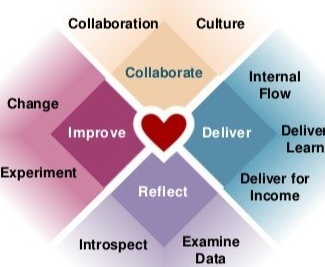
The Golden Circle hierarchy requires systematic processes to maintain alignment and momentum while enabling continuous improvement through systematic retrospectives that coordinate all organizational work. These three interconnected processes build organizational learning capability through Heart of Agile principles.
Process Integration Philosophy with Organizational Design
Systematic Communication Cycle Design: Each process level corresponds directly to the Golden Circle hierarchy, ensuring consistent information flow and decision-making across organizational levels while coordinating business strategy execution with technical capability development. The processes work together to prevent strategy drift while enabling adaptive execution based on delivery reality and systematic learning integration across all organizational work types.
Continuous Improvement Through Systematic Retrospectives: Information flows bidirectionally through all three processes—strategic direction moves down while delivery reality, obstacles, and improvement insights move up across business outcomes and technical improvements. Regular retrospectives at each level capture learning and identify impediments requiring escalation to higher organizational levels when they're too big for current scope to resolve, coordinating business strategy with technical architecture decisions.
1. Company Goals Process with Resource Integration
Primary Purpose: "Reach and maintain Product-Market and Product-Economic Fit!"
- Organizational Function: Strategic alignment and resource allocation across all teams including business outcome achievement and technical capability development
- Timeframe: Quarterly Workshop with all teams participating together
- Golden Circle Connection: Translates organizational WHY into measurable strategic objectives coordinating business strategy with technical strategy
- Heart of Agile Integration: Full cycle of Collaborate (strategic alignment) → Deliver (goal achievement) → Reflect (results analysis) → Improve (strategic adaptation) across all organizational work
Core Activities and Outcomes:
Goal KPI Setting and Strategic Alignment (Collaborate)
- Establish measurable business outcomes defining quarterly success in terms of user adoption, satisfaction, and business impact, supported by technical capability development initiatives
- Connect strategic objectives to customer value metrics and business revenue/growth indicators through collaborative cross-functional input including technical architecture considerations
- Create clear success criteria that all teams understand and can influence through systematic strategic communication coordinating business and technical work
- Balance leading indicators (progress metrics) with lagging indicators (outcome metrics) based on organizational learning across business results and technical capability advancement
Resource Allocation and Priority Decisions (Deliver)
- Make explicit decisions about team capacity allocation across competing strategic priorities including business initiatives and technical improvements based on systematic trade-off criteria
- Resolve resource conflicts through transparent discussions based on business impact, strategic alignment, and organizational capability across business outcome delivery and technical development
- Plan cross-functional coordination requirements and shared resource management across teams and initiatives including technical architecture work spanning multiple business objectives
- Establish goal ownership and accountability structures with clear escalation paths for systematic impediment resolution coordinating business and technical challenges
Progress Review and Strategic Learning (Reflect)
- Demo completed initiatives including both business outcomes and technical improvements, measuring impact against original success criteria using systematic measurement approaches
- Conduct comprehensive retrospectives capturing strategic learning, process improvements, and systematic coordination effectiveness across business execution and technical development
- Analyze goal achievement patterns and organizational capability development progress through systematic performance assessment including technical capability advancement
- Identify impediments too large for initiative-level resolution requiring organizational-level attention and strategic intervention across business and technical domains
Strategic Adaptation and Continuous Improvement (Improve)
- Adjust strategic direction based on market feedback, delivery reality, and systematic learning integration from retrospective insights across business results and technical capability assessment
- Plan next quarter's strategic focus based on accumulated organizational learning and changing business context including technical platform evolution requirements
- Escalate systematic impediments to executive level requiring additional funding, external resources, or organizational structure changes coordinating business and technical needs
- Document successful strategic patterns and approaches for sharing across organizational levels and future strategic planning cycles including technical architecture evolution
2. Initiatives Process with Technical Strategy Integration
Primary Purpose: "Focus engineering efforts on changes with biggest impact on the business"
- Organizational Function: Tactical planning and cross-team coordination including technical initiatives competing with business priorities
- Timeframe: Monthly Grooming Meeting with initiative owners and key stakeholders including technical leaders
- Golden Circle Connection: Translates strategic HOW into specific implementation approaches coordinating business solutions with technical improvements
- Heart of Agile Integration: Monthly cycle of Collaborate (solution development) → Deliver (initiative progress) → Reflect (approach effectiveness) → Improve (solution refinement) across business and technical initiatives
Core Activities and Outcomes:
Initiative Scope Refinement and Solution Development (Collaborate)
- Break strategic objectives into implementable initiatives with clear boundaries, success criteria, and resource allocation requirements including business outcomes and technical improvements competing systematically
- Define initiative hypotheses and validation approaches enabling rapid learning and systematic course correction based on delivery evidence across business results and technical capability development
- Plan initiative coordination requirements with other organizational efforts and external dependencies through systematic collaboration including technical architecture decisions affecting multiple business initiatives
- Identify required capabilities and resource allocation across teams and time periods based on realistic capacity assessment coordinating business development with technical capability building
Cross-Initiative Coordination and Portfolio Management (Deliver)
- Evaluate competing initiatives based on business impact, resource efficiency, and strategic alignment using systematic prioritization criteria that treat business features and technical improvements identically
- Make trade-off decisions when resource constraints require initiative adjustment, postponement, or scope reduction through collaborative stakeholder input including technical leaders advocating for technical initiatives
- Coordinate initiative timing to optimize for organizational learning, capability building, and systematic market response including technical platform development supporting multiple business initiatives
- Manage initiative portfolio to balance immediate business needs with long-term strategic capability development including technical infrastructure investments
Initiative Effectiveness Assessment (Reflect)
- Conduct systematic retrospectives on initiative progress, solution approach effectiveness, and cross-functional coordination quality including technical initiative contribution to business outcomes
- Analyze initiative delivery patterns, resource utilization efficiency, and stakeholder satisfaction with coordination processes across business execution and technical development
- Document successful approaches and coordination patterns for sharing across teams and scaling to other initiatives including technical architecture patterns supporting business strategy
- Identify impediments too large for team-level resolution requiring initiative-level attention and systematic coordination intervention across business and technical domains
Solution Approach Optimization (Improve)
- Refine initiative approaches based on delivery reality, user feedback, and systematic learning from retrospective insights across business outcomes and technical capability assessment
- Optimize cross-functional coordination processes based on collaboration effectiveness assessment and stakeholder feedback including technical leaders contributing to business strategy discussions
- Escalate systematic impediments to goal level requiring strategic attention, additional resources, or organizational capability development coordinating business and technical requirements
- Plan initiative evolution and adaptation based on market response, organizational learning, and changing strategic priorities including technical platform evolution supporting business agility
3. Slices Process with Technical Work Integration
Primary Purpose: "Deliver Value faster and Cheaper!"
- Organizational Function: Execution planning and delivery coordination including technical improvements competing with business features
- Timeframe: Weekly Grooming Meeting with cross-functional delivery teams including technical specialists
- Golden Circle Connection: Translates strategic WHAT into specific deliverable work items coordinating business value with technical advancement
- Heart of Agile Integration: Weekly cycle of Collaborate (planning) → Deliver (execution) → Reflect (retrospective) → Improve (process optimization) across business and technical deliverables
Core Activities and Outcomes:
Slice Scope Definition and Planning (Collaborate)
- Define slice deliverables providing genuine user value and technical capability advancement while enabling rapid delivery and systematic feedback collection
- Identify core functionality delivering user benefit while eliminating non-essential features that delay value delivery, including technical improvements that enhance delivery capability
- Plan slice implementation approach optimizing for learning, user feedback, and rapid iteration based on systematic validation across business features and technical enhancements
- Create slice validation methods providing clear evidence of user value and strategic progress through measurable outcomes across business impact and technical advancement
Delivery Execution and Coordination (Deliver)
- Prioritize slice delivery based on user impact, strategic value, technical dependencies, and realistic team capacity assessment coordinating business features with technical improvements
- Manage team capacity allocation to prevent over-commitment while maximizing delivery throughput and sustainable performance across business outcome delivery and technical capability development
- Coordinate cross-functional work ensuring slice completion requires minimal handoffs and systematic coordination overhead across business and technical contributors
- Track delivery progress through working functionality and measurable user outcomes rather than activity completion reports across business value and technical advancement
Delivery Effectiveness Assessment (Reflect)
- Conduct systematic retrospectives on delivery velocity, quality, coordination effectiveness, and team satisfaction with processes across business feature delivery and technical improvement implementation
- Analyze delivery patterns, bottlenecks, and systematic improvement opportunities through team collaboration and feedback integration including technical constraint identification
- Document successful delivery approaches and coordination patterns for sharing across teams and organizational learning including technical practices supporting business outcomes
- Identify impediments too large for individual resolution requiring team-level attention and systematic process improvement across business and technical work
Process Optimization and Capability Building (Improve)
- Optimize delivery processes based on retrospective insights, team feedback, and systematic measurement of coordination effectiveness across business execution and technical development
- Improve estimation accuracy, resource planning, and delivery predictability through systematic learning integration and process refinement coordinating business commitments with technical reality
- Escalate systematic impediments to initiative level requiring cross-functional coordination or additional resources and support across business and technical domains
- Build team capability for autonomous execution and systematic coordination through continuous improvement and knowledge sharing across business domain expertise and technical skills
Process Interconnection and Systematic Learning Flow
Systematic Information Architecture with Technical Integration
Strategic context flows from Company Goals → Initiatives → Slices while delivery reality, user feedback, and systematic learning insights flow back up through Slices → Initiatives → Company Goals, coordinating business strategy execution with technical capability development. This bidirectional information flow prevents strategy drift while enabling adaptive execution based on evidence and systematic improvement across all organizational work types.
Organizational Strategic Intelligence Development
The process cycles systematically build collective strategic reasoning capability across all organizational levels through regular retrospectives and systematic learning integration. Through repetitive strategic and tactical analysis including technical initiatives competing with business priorities, leadership develops genuine understanding of business domains and technologies, while teams contribute strategic insights from delivery reality including technical constraint identification, creating cross-functional strategic thinking that identifies opportunities for competitive advantage and business model innovation through systematic learning integration.
Impediment Escalation and Systematic Problem-Solving
Regular retrospectives at each level identify impediments and coordination challenges across business execution and technical development:
- Team-level impediments: Resolved within slice process through systematic problem-solving and process optimization coordinating business and technical work
- Cross-team impediments: Escalated to initiative level for coordination intervention and resource allocation including technical initiatives affecting multiple business outcomes
- Organizational impediments: Escalated to goal level for strategic attention and systematic organizational capability development coordinating business strategy with technical architecture
Continuous Learning Integration Across All Work Types
Each process level captures learning that improves both strategic direction and execution capability through systematic retrospectives and improvement cycles. Insights from weekly execution inform monthly initiative planning, which shapes quarterly strategic direction, creating systematic organizational learning cycles that enhance both coordination effectiveness and strategic intelligence across business outcomes and technical capabilities.
These three interconnected processes create the operational rhythm that transforms strategic intent into coordinated execution while building organizational learning capability through Heart of Agile principles: Collaborate, Deliver, Reflect, Improve.